Think back to a recent moment when you felt safe. Safe enough to rest, breathe deep, use imagination and connect with yourself and those around you. Where were you? What did it look like? Sound like? Feel like? For many of us, those memories feel accessible and present. For survivors of trafficking, safety and the feeling of safety often feels inaccessible and distant, removed through acts of exploitation and abuse.
Last week, a client mentioned that engaging with our staff (along with two other advocates in the community) was the first time they’ve felt safe. With a history of system involvement as a child, trafficking, and social isolation, this client is now experiencing the healing impact of safety in a home, holistic support, and individualized care. One of our primary goals as we walk with friends who have experienced sexual exploitation is to help them establish safety, sometimes for the first time in their lives, so that they can connect with themselves and the world around them. Last month, we looked at the issue of human trafficking (which you can read here if you haven’t yet), and this month, we want to focus on our response.
At Red Oak Hope, the heart of our mission is the belief that every survivor deserves freedom, hope, and the opportunity for restoration from trafficking and exploitation.
Freedom from trafficking is more than just a one-time occurrence. Freedom for a lifetime is fostered by walking with individuals through crisis, meeting basic needs, providing safe shelter, and creating space where exploitation no longer defines their daily reality. We do this through crisis response, advocacy, case management, and in large part through collaborative partnerships with other local service providers, law enforcement, and the criminal justice system to help survivors establish and maintain safety.
We nurture hope through authentic, side-by-side relationships. We take time to build trust, acknowledge each person’s experiences, and offer tools like case management to help set and achieve goals. Hope grows when people are empowered to make choices and imagine a future that reflects their own dreams. Through our Transitional Housing Program, hope can take root when shelter and support are a given.
We support restoration by providing space to learn, try, and grow through life skills support, job readiness, and our Restore program, which focuses on a somatically oriented approach to trauma recovery and healing for lifelong resiliency with an emphasis on disability support.
With these services, we aim to come alongside survivors, meet their tangible needs, and provide a safe and supportive environment for healing, so that each person can be secure, independent, and free from re-victimization. With a dedicated and highly trained team, thoughtfully designed programs, and a commitment to robust partnership, we are seeing individuals begin the healing journey and thrive.
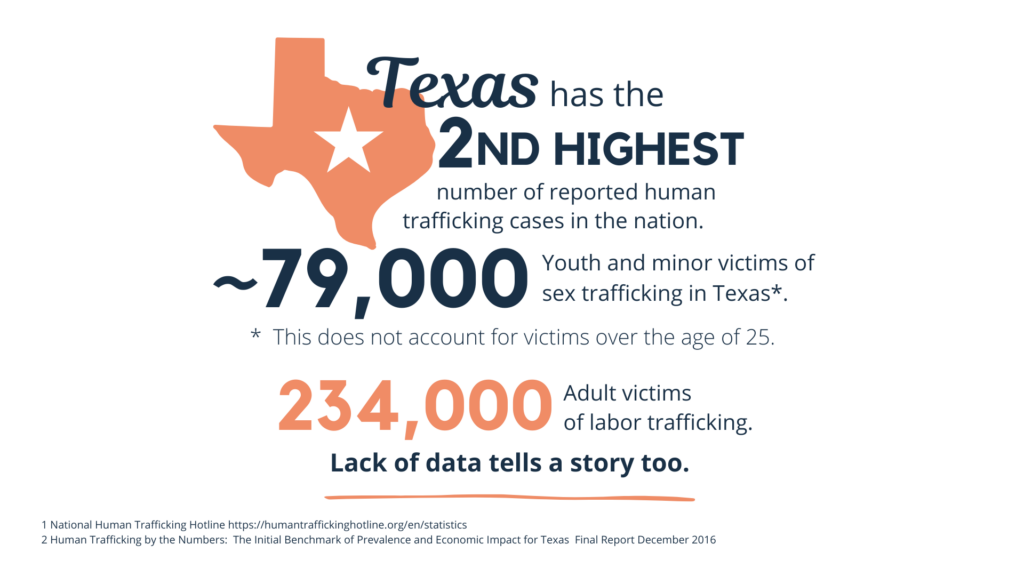
Popular media often portrays trafficking as dramatic abductions, zip-tied car handles, or ominous white vans. While kidnapping may occur in rare cases, this is far from the norm. Did you know that 91% of trafficking victims were trafficked either by a family member, friend, intimate partner, or employer? We believe deeply in the importance of creating an accurate understanding of the realities of trafficking so that we don’t oversimplify or over-sensationalize the issue at the expense of accuracy, making it challenging to identify and understand trafficking as it occurs around us.
We often share that trafficking is the exploitation of vulnerabilities, and this perspective helps us better understand who may be at risk. The following are some examples of vulnerabilities traffickers target and exploit.
Sexual exploitation and human trafficking are complex topics, and we believe having an accurate understanding of the issue is one of our best tools to prevent and combat exploitation, identify victims, and create robust programs to support survivors as they heal.
Simply put, human trafficking is a crime. Individuals who have been trafficked are victims of a crime, and traffickers should be held accountable by the criminal justice system. Human Trafficking is the exploitation of men, women, and children for forced labor or sex for a third party’s profit or gain and thrives in the shadows of our communities every day. Krista Melton, an experienced and dedicated prosecutor, explains, “Human trafficking is the crime of reducing people to things.” It happens around the world, in every state, and right here in Central Texas, where we work every day.
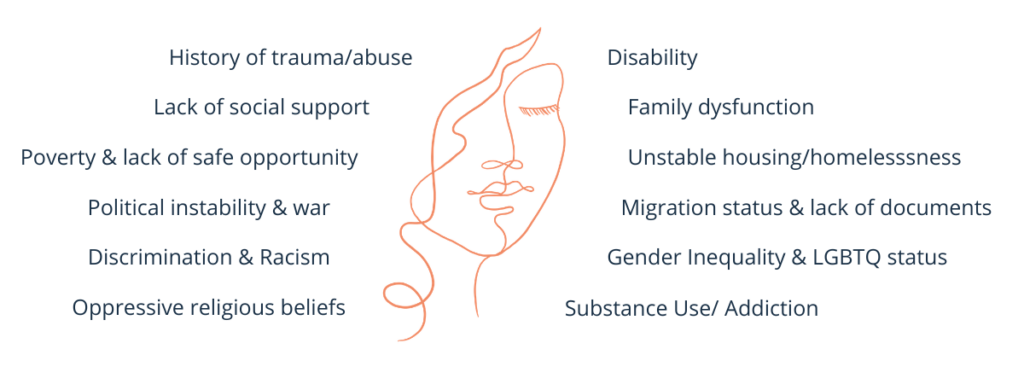
Although not everyone who has experienced one or more of these vulnerabilities has been trafficked, almost everyone who has been trafficked has experienced some combination of these vulnerabilities. While we know that victims of trafficking come from all kinds of different places, socioeconomic backgrounds, and family structures, our awareness of these vulnerability factors can help us notice people at risk for potential exploitation. Many of the clients we serve have experienced homelessness, system involvement as minors, childhood sexual abuse, poverty, and have been impacted by disability.
Traffickers use a combination of force, fraud, and coercion to manipulate and control a vulnerable person. Tactics may range from subtle to overt. Common ways individuals might be controlled are through debt, isolation, lack of family support, threats, violence, confiscation of identifying documents, fear of deportation or law enforcement, substance use and addiction, control over children, shame, lack of awareness about rights, and loss of hope.
Sex trafficking has a devastating impact on victims, affecting their physical, mental, and emotional well-being. Trafficking and exploitation result in complex trauma that impacts every facet of a survivor’s life.
But freedom, hope, and restoration are possible! At Red Oak Hope, we aim to come alongside survivors, meet their tangible needs, and provide a safe and supportive environment for healing, so that each person can be safe, independent, and free from re-victimization. We work tirelessly to build communities of belonging, investing in deep relationships, community, and connection, which bring about healing.